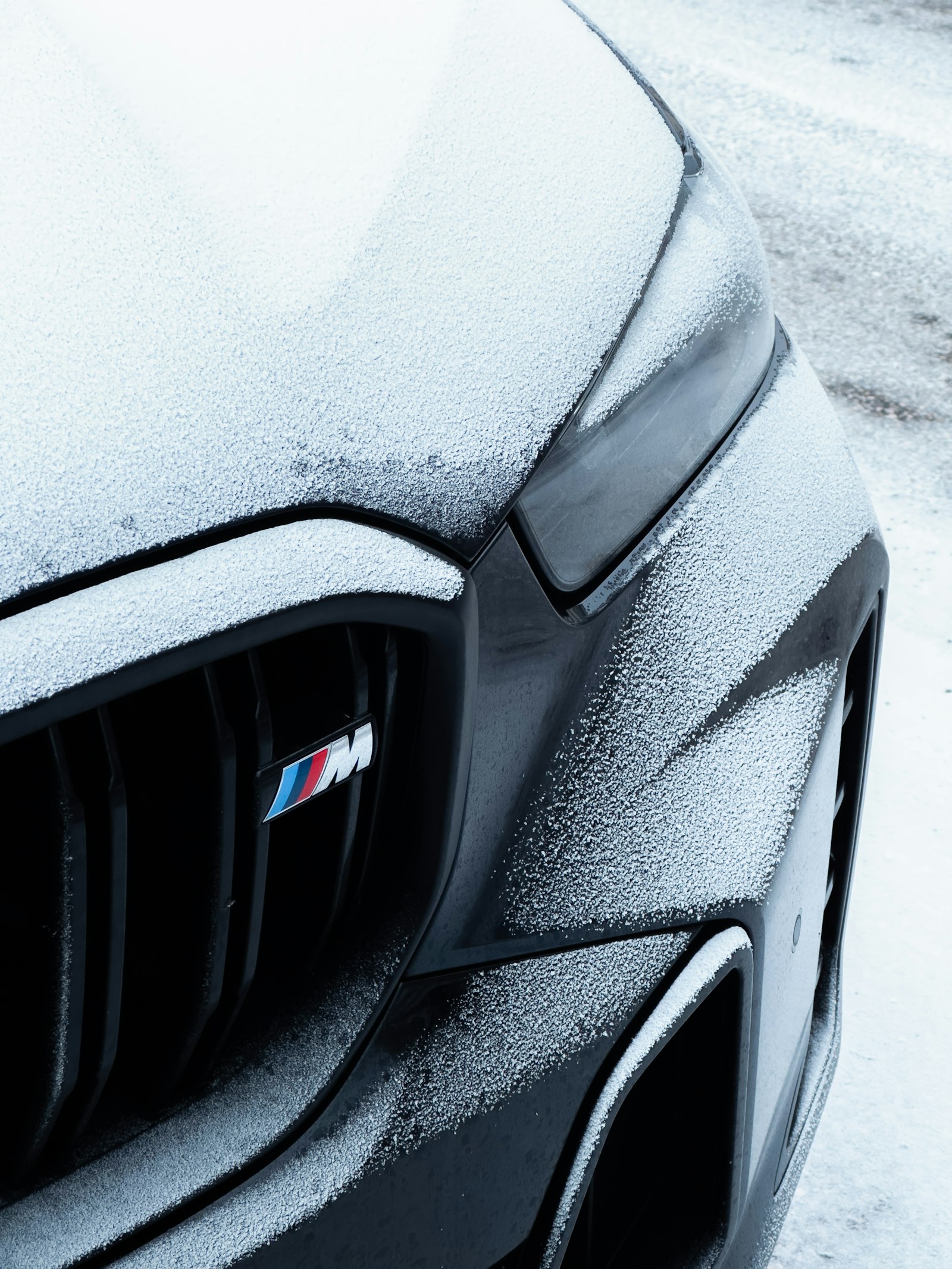
Most of the winter calls we take come from the first really cold morning.
The fix almost always comes down to three things: the oil, the tires and the battery. None of them is complicated. Each one is specific.
Every fall there's a stretch in Calgary where a Chinook keeps things mild for a week, then the first minus 25 morning shows up overnight. Most of the winter calls we take come from that morning: a car that won't crank, tires that won't grip, an engine that sounds rougher than it did in September.
Good winter car maintenance on a European car comes down to three things: the oil, the tires and the battery. None of them is complicated. Each one is specific, and that's where we see people get caught.
Cold makes any oil thicker. On a minus 25 start, oil takes longer to reach the top of the engine, and those first seconds are when most wear happens.
Old oil makes that worse. As oil ages it breaks down, thickens and picks up moisture and fuel, and the additives that protect the engine get used up. Oil that was coping fine in August is slower to flow and protects less on a January morning. It also degrades just sitting in the engine, so low kilometres don't mean it's still good.
That's why keeping up with your maintenance matters most heading into winter. If you're close to your next oil change, do it before the cold rather than in the middle of it. Fresh oil is the cheapest protection an engine gets heading into cold starts. Our oil change service page covers what's included.
Once daytime temperatures sit consistently below about 7°C, the rubber in an all-season tire stiffens and loses grip, well before any snow arrives. A winter tire uses a compound that stays soft in the cold. Its tread is cut with fine slits, called siping, that bite into snow and ice.
When you shop, look for the three-peak mountain and snowflake symbol on the sidewall. It marks a tire that has passed a severe-snow traction test.
The first real snowfall is when much of the city calls at once. Booking your seasonal wheel swap in the dry weeks before means you pick the time. While you're at it, check your tread; our Toonie Test post shows how in your driveway.
If you drive an AWD car, our post on AWD and winter tires explains why xDrive and quattro don't replace them.
Cold slows the chemical reaction inside a battery. It ends up with less power available at the exact moment the engine needs more to turn over thick oil. A battery that's been fine all summer can be working near its limit without showing any sign, and the first very cold morning is usually when you find out.
If your battery is three to five years old, have it tested before winter. A test takes a few minutes and tells you how much capacity is left. That's a far better guide than whether it started yesterday.
This is the part that surprises people. On many BMWs, and on a lot of other European cars, the energy management system tracks the battery's age and condition and adjusts charging to match. Fit a new battery without telling the car, and the car keeps charging the new battery as if it were the old one. The new battery can be undercharged or overcharged and wear out early.
Registering the battery is a quick step with the right diagnostic tools, and it's part of our coding and programming work. If you're replacing a battery yourself, this is the step not to skip.
European cars aren't fragile in winter. They're specific. Fresh oil, the right tire for the temperature and a battery the car knows about cover most of what a Calgary winter throws at them. A lot of what we see in January started as one of these three in October.
If you'd like all three looked at in one visit, call us at 403-243-3232 or reach us through our contact page. We're in the shop Monday to Friday, 8:30 to 17:30.
When you come to Sheni’s Auto Trend, you join our family. Sign up for our newsletter for information about upcoming events, performance upgrade inspiration, and tips on keeping your car in tip top shape directly in your inbox.
At Sheni’s, your comfort and safety are our number one priority.